How to Practice DOM Trading Without Recording Data
Most orderflow platforms require you to record and store your own data before you can replay it. This can make it difficult to consistently practice. Replaying on-demand historical data lets you pick a particular time without having to prerecord it.
Market conditions vary day to day, but the open behaves very differently from midday. Practicing the same time of day is critical for consistency.
This post defines a repeatable process for practicing DOM trading using short, constrained sessions.
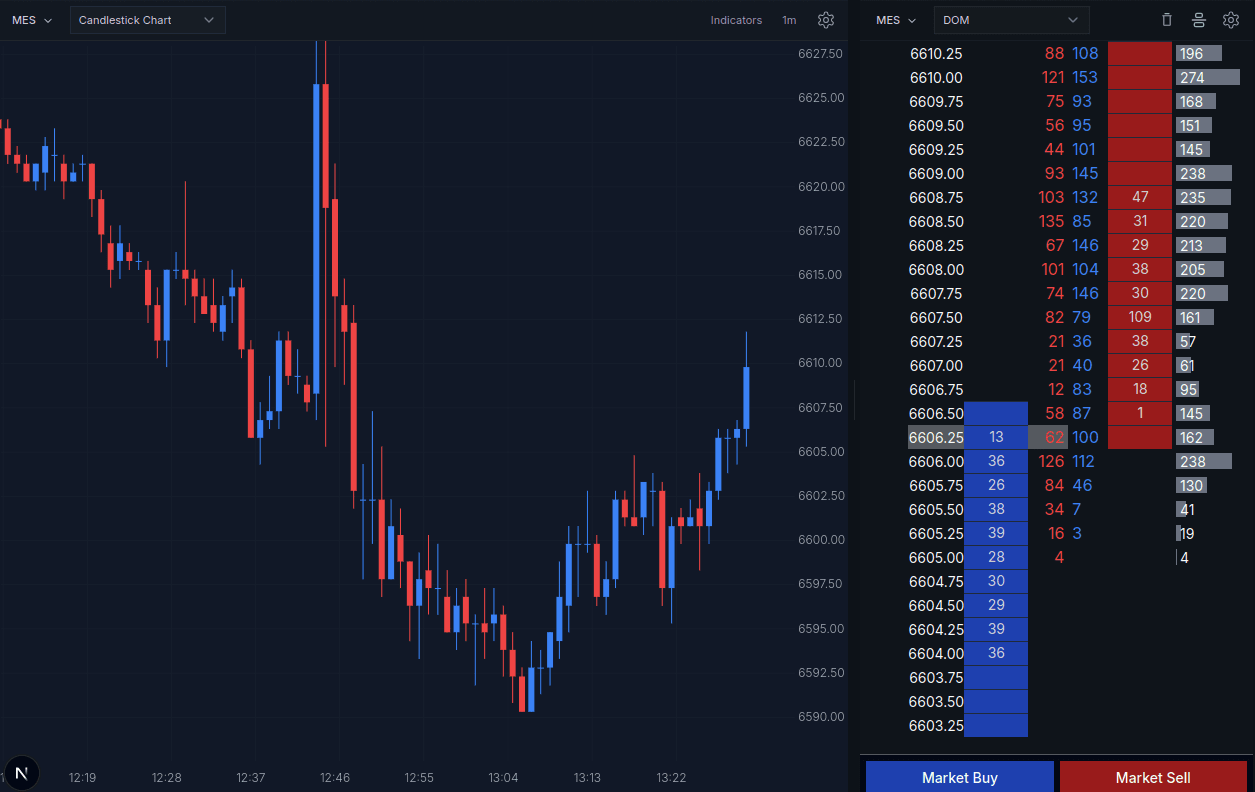
Structured Practice Setup
Trade within a fixed time window. In this example, the session is limited to 15 minutes.
Spend the first few minutes observing. Look at the market orders in the center columns - how many trades occur before price moves?
The goal is not to predict direction, but to understand how price moves through different areas of liquidity.
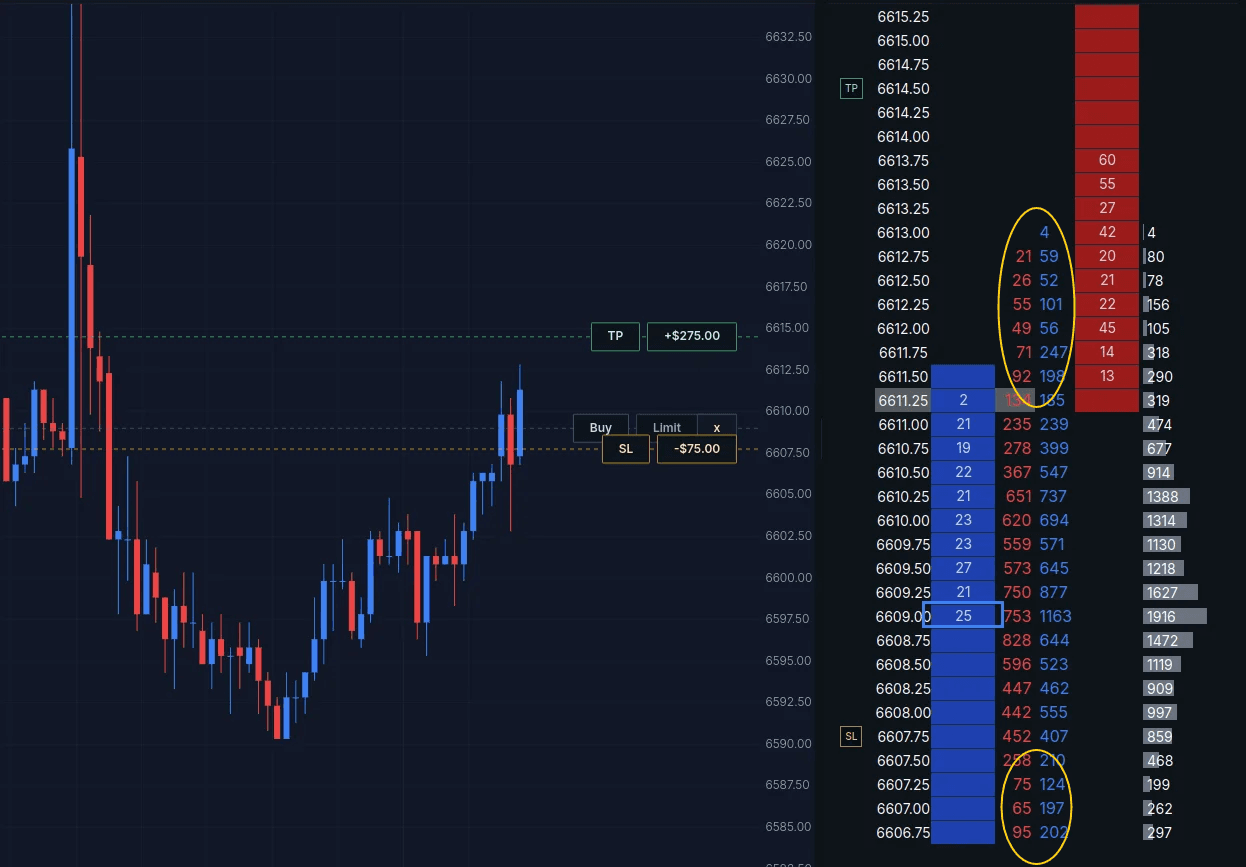
Based on our 15 minute window of concentration, we expect to make trades that last less than 1 minute. Given current market conditions and volatility our profit target and stop loss should reflect that.
Applying It to a Trade
In the example below, the circled areas are regions where price previously moved with little resistance. We expect price to move quickly through these areas. Our stop loss is placed just above the lower zone - we don't want to get run over on the downside. Our take profit is positioned about 5 ticks above the upper zone - we do want to capture the movement above if it runs.
If you would like to check out the DOM interface check out Scalping ES.
DOM skill is built through controlled repetition, not live randomness. Pick a session, constrain time, and study how price moves through liquidity.
Do that daily.