Volume Profile Settings for NQ, ES, GC and 6E Futures
A volume profile shows how much traded at each price over a stretch of candles. The setting that changes it most is the period: how many candles each profile covers. The same period draws very different profiles on different contracts, because they move different distances. Forty 1-minute candles from the NQ open cover about 168 points. The same forty candles on 6E cover 24 ticks.
The numbers below come from six months of 1-minute candles in the MarketByOrder archive, April 27 to October 27, 2026, about 165 sessions per contract. Each one is the median for that part of the day.
Start from how long you hold a trade
A profile is the context around a trade, so it should cover more time than the trade does. A common rule of thumb from multi-timeframe trading, Alexander Elder's triple screen, is that each step up in timeframe is about five times longer. On 1-minute candles that gives:
| You hold a trade for | Period to start from |
|---|---|
| 2 minutes | 10 |
| 5 minutes | 20 to 25 |
| 10 minutes | 40 to 50 |
| 30 minutes | 120 to 150 |
The period counts candles, not minutes. On 5-minute candles a period of 40 covers 200 minutes.
Then check how many rows you get
Each row of the profile is one row of the chart: one tick, or several ticks when the chart style condenses rows. The chart styles that ship with MarketByOrder condense NQ, MNQ, GC and MGC four ticks to a row, so an NQ row is 1 point and a GC row is $0.40. ES and 6E rows are one tick.
On a chart a few hundred pixels tall, a profile of about 40 to 100 rows is the easiest to read. Fewer gives a handful of wide bars with no shape. More squeezes each row to a pixel or two, and the high volume prices blur into their neighbours.
If the period from your trade length gives far more than 100 rows, shorten it. If it gives fewer than 40, lengthen it, or accept a coarser profile.
NQ and MNQ
| Session | Period 20 | Period 40 | Period 60 | Period 120 |
|---|---|---|---|---|
| Asia, 7 pm to 2 am | 41 | 58 | 72 | 107 |
| London, 3 am to 8 am | 43 | 60 | 74 | 110 |
| US open, 9:30 to 11 am | 117 | 168 | 191 | - |
| Midday, 11 am to 2 pm | 63 | 87 | 103 | 157 |
The US open is where NQ needs the shortest period. Forty candles from 9:30 span about 168 points, so a 40-candle profile there is 168 rows tall. At 20 it is about 117. Later in the morning the same 40 candles give about 87 rows, and overnight a period of 60 gives about 72.
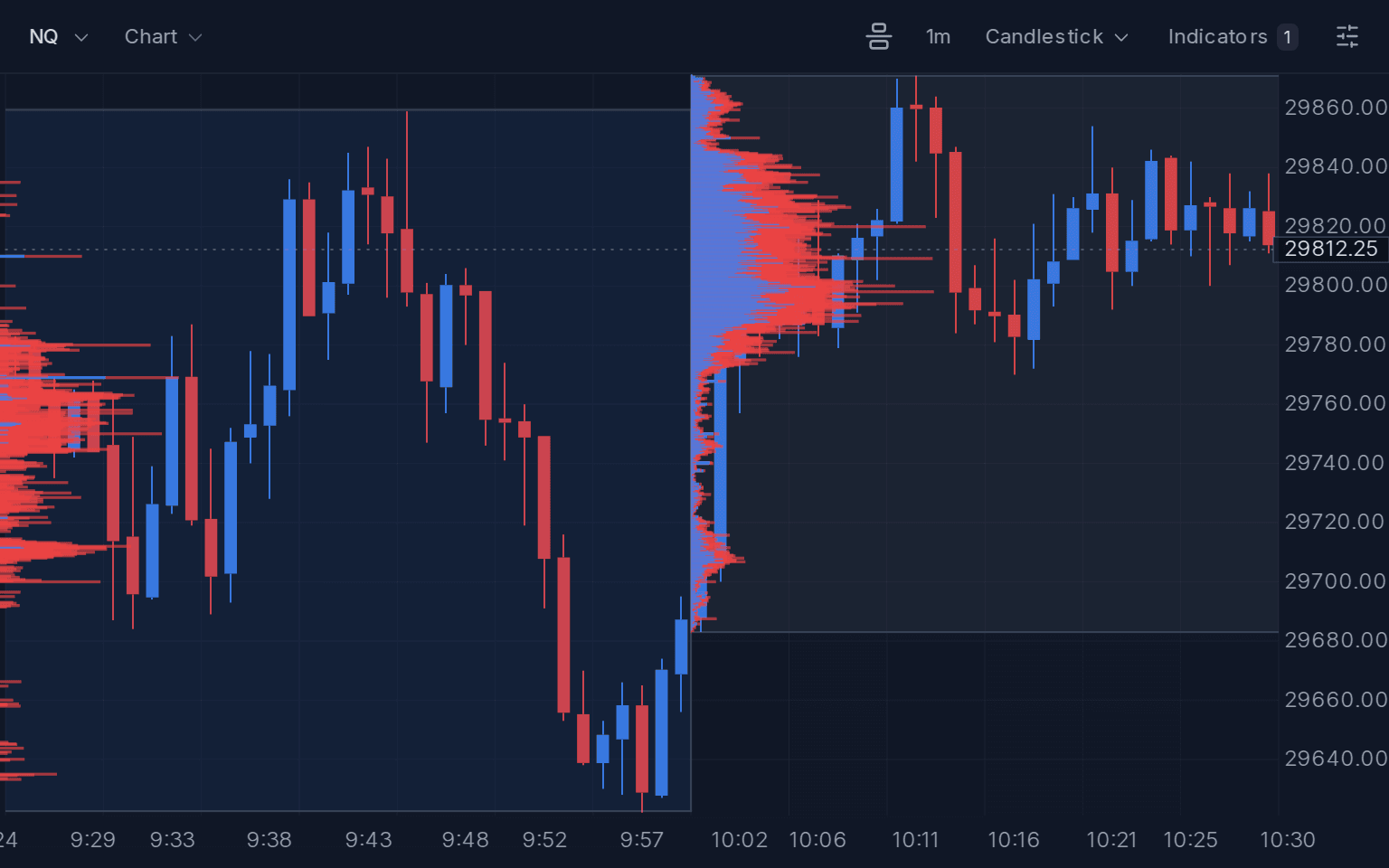
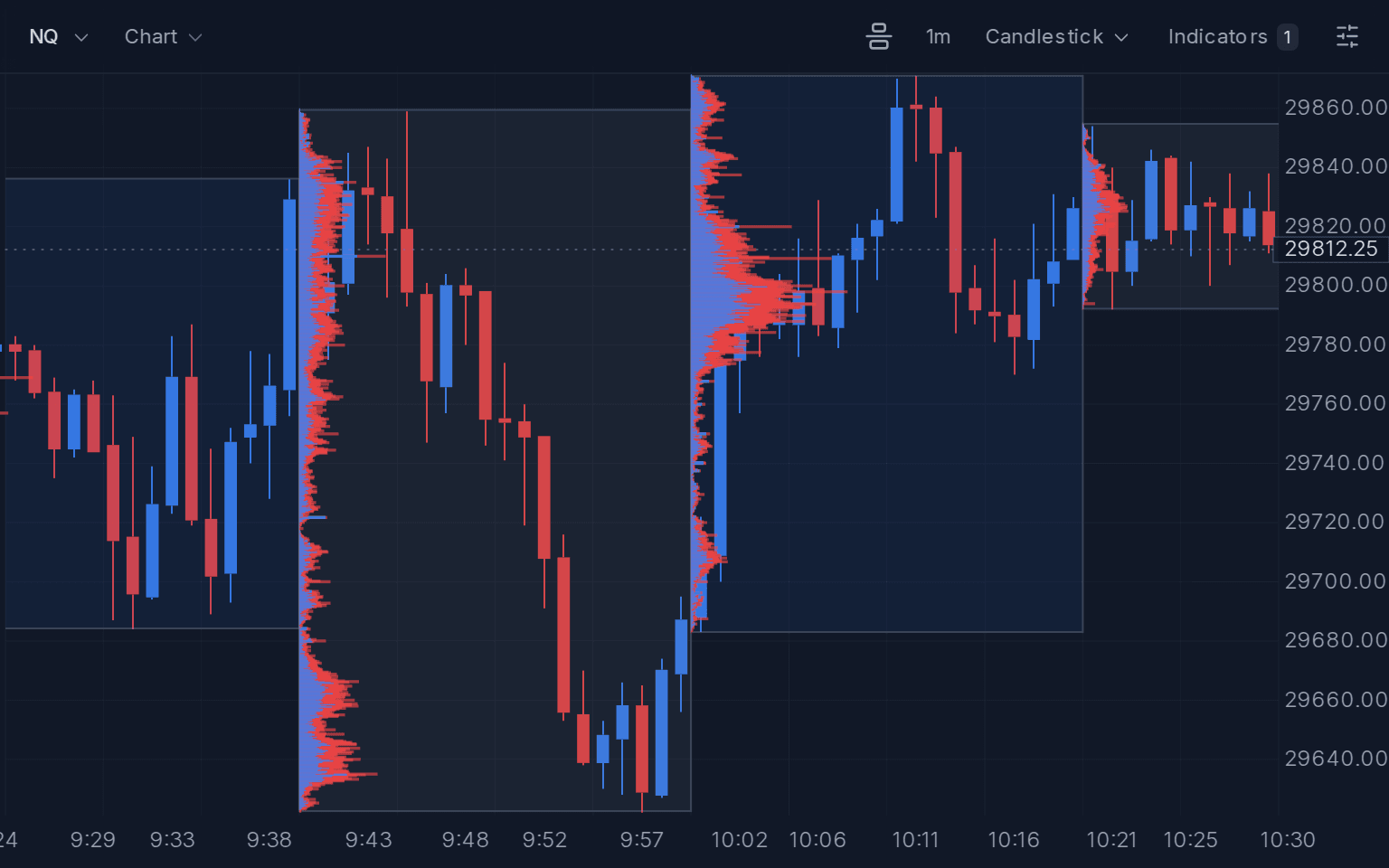
- US open: 20
- Midday: 40
- Asia and London: 60
MNQ trades at the same prices as NQ, so it gets the same rows. Its volume is smaller, which changes how long the bars are, not how many there are. The open window is 90 minutes, so it has no 120-candle figure.
ES
| Session | Period 20 | Period 40 | Period 60 | Period 120 |
|---|---|---|---|---|
| Asia, 7 pm to 2 am | 21 | 30 | 37 | 55 |
| London, 3 am to 8 am | 26 | 36 | 46 | 64 |
| US open, 9:30 to 11 am | 66 | 99 | 119 | - |
| Midday, 11 am to 2 pm | 41 | 58 | 72 | 104 |
ES moves about a quarter as many ticks as NQ, and its rows are one tick, so the default period of 40 fits the open: about 99 rows. Overnight ES is quiet, around 110 contracts a minute in Asia against about 3,600 at the open, and a 40-candle profile there is only about 30 rows.
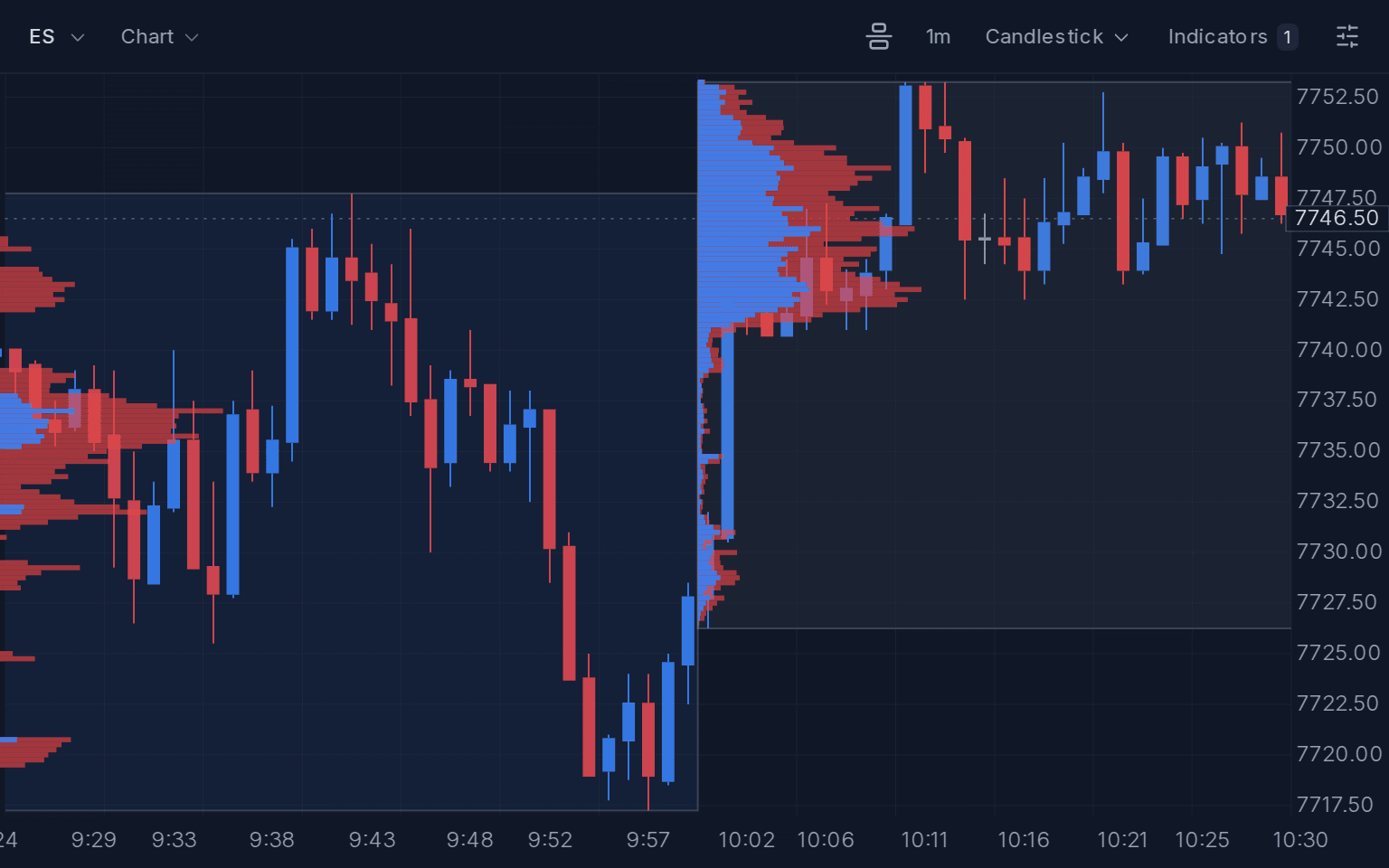
- US open: 40
- Midday: 60
- Asia and London: 120
GC
| Session | Period 20 | Period 40 | Period 60 | Period 120 |
|---|---|---|---|---|
| Asia, 7 pm to 2 am | 22 | 33 | 41 | 65 |
| London, 3 am to 8 am | 20 | 28 | 35 | 47 |
| US open, 9:30 to 11 am | 37 | 52 | 60 | - |
| Midday, 11 am to 2 pm | 22 | 31 | 40 | 60 |
Gold's overnight sessions are closer to its US session than the index futures are. A 40-candle block in London covers about 55% of the range of one at the open on GC, against about 35% on NQ. With $0.40 rows, GC needs a longer period than NQ through most of the day.
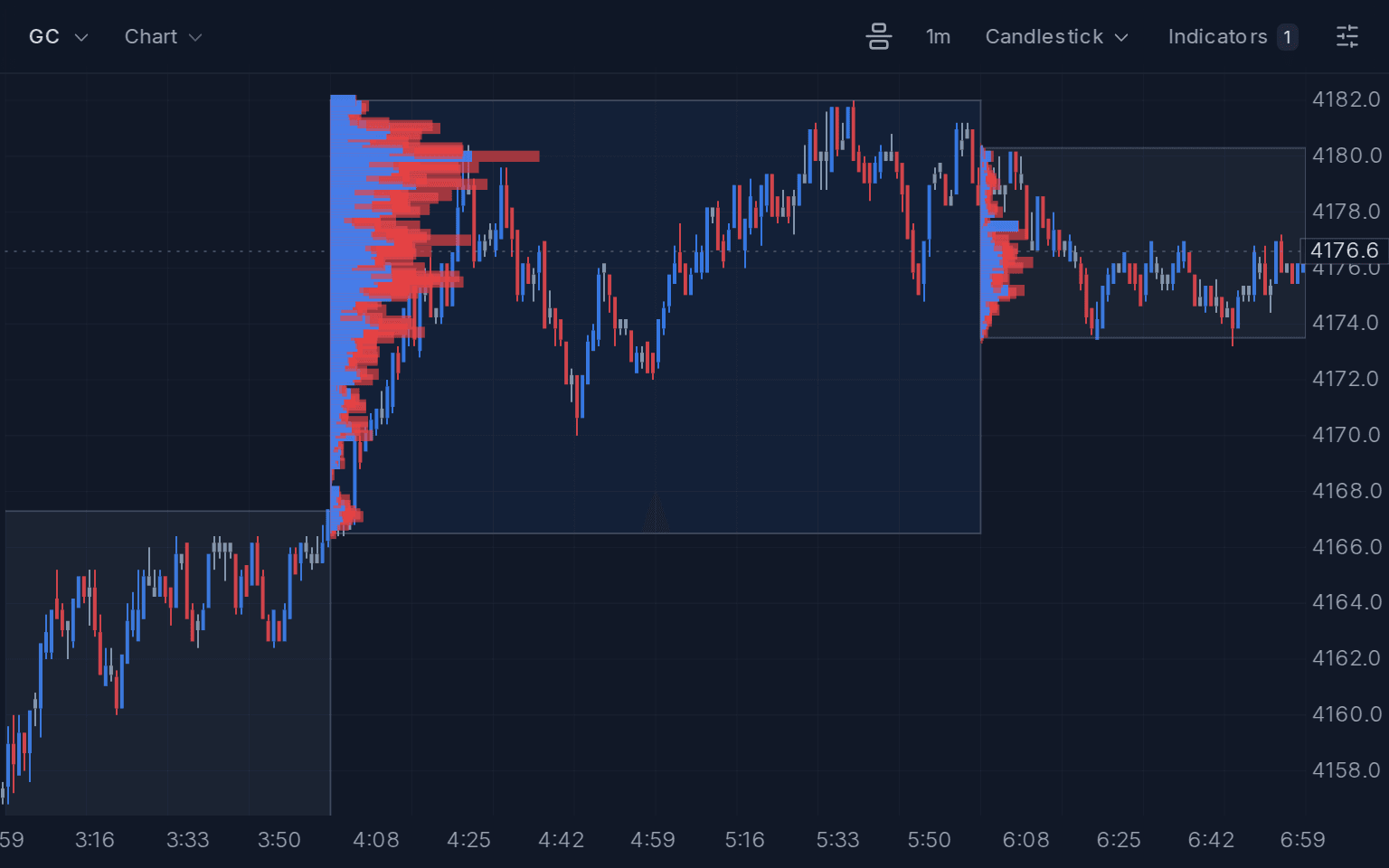
- US open: 60
- Midday, Asia and London: 120
6E
| Session | Period 20 | Period 40 | Period 60 | Period 120 |
|---|---|---|---|---|
| Asia, 7 pm to 2 am | 9 | 13 | 17 | 29 |
| London, 3 am to 8 am | 12 | 17 | 21 | 31 |
| US open, 9:30 to 11 am | 17 | 24 | 29 | - |
| Midday, 11 am to 2 pm | 11 | 16 | 21 | 33 |
6E never reaches 40 rows on 1-minute candles. The euro moves in few ticks: forty candles at the US open cover 24 ticks, or 0.0012. Its busy hours are London and the US morning, about 73 and 197 contracts a minute, against 18 in Asia.
- US open: 60
- London and midday: 120
- Or turn on Volume Profile - All for one profile over everything loaded
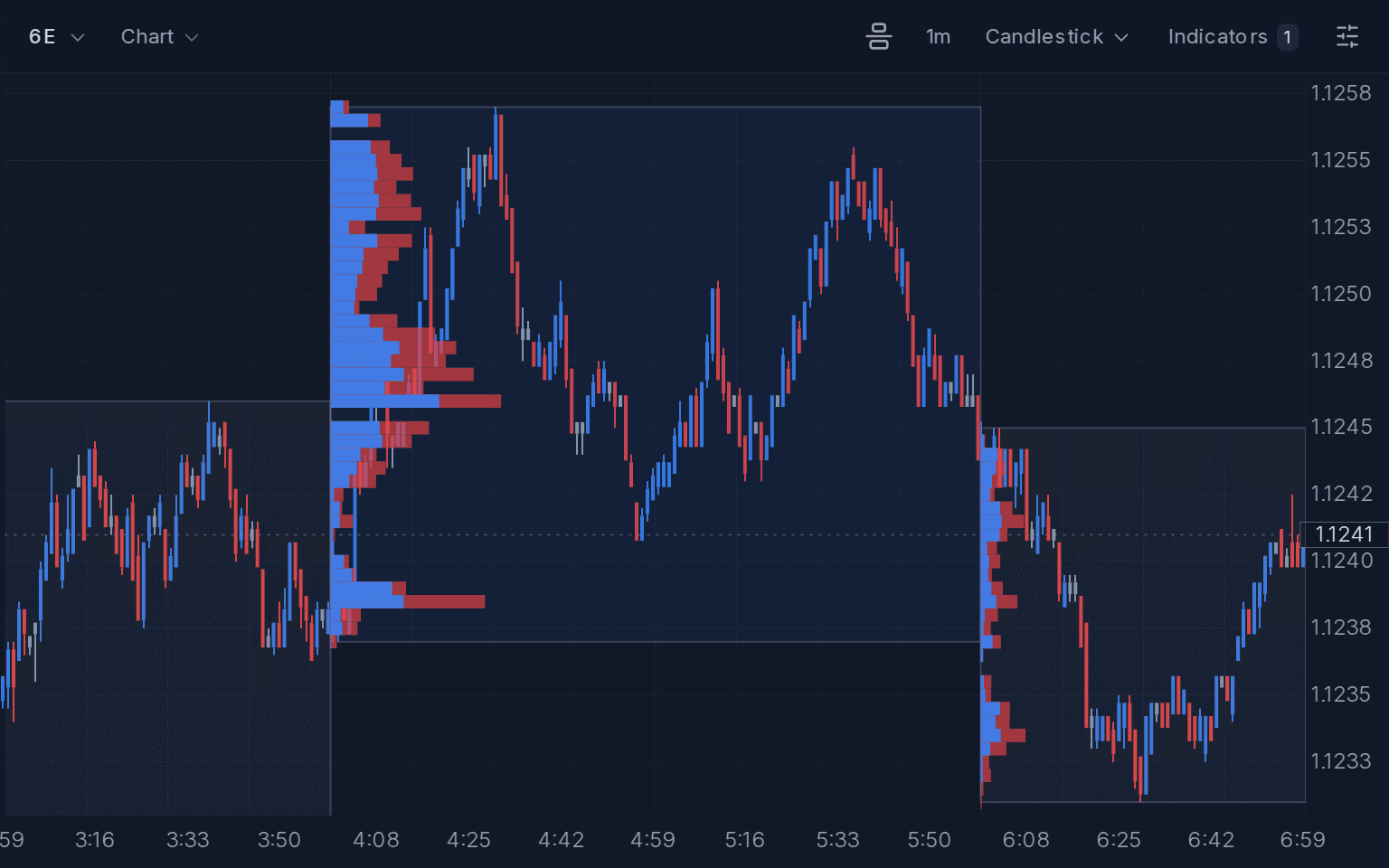
Expect a coarse 6E profile with a clear point of control rather than a detailed shape.
Change the period in MarketByOrder
- Open a replay and set the chart interval to 1m.
- Click Indicators in the chart header and turn on Volume Profile - 40.
- Click Settings (the sliders icon) in the chart header and change Period. It steps by 5, from 5 to 500. Profile width sets how far the longest bar reaches across its block.
- Each chart keeps its own value, so two charts of the same symbol can run different periods.
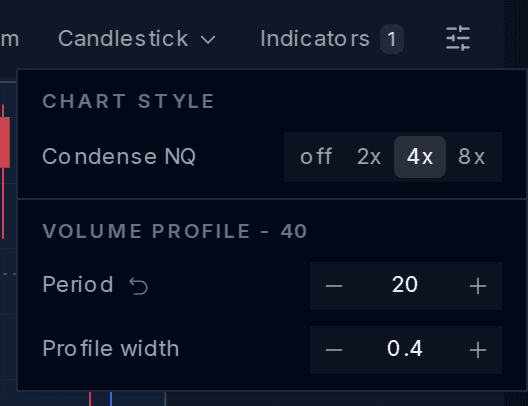
On NQ, MNQ, GC and MGC the same Settings menu has a Condense setting (Condense NQ on NQ): off, 2x, 4x or 8x. The profile's rows follow it, so they always line up with the footprint rows. If a period gives too many rows and you want to keep it, raise Condense instead. Open the NQ replay from 9:20 ET on October 15, 2026 to try it on an open. An account is required to start a replay.
For what the point of control and value area mean, see the volume profile docs. The full script behind Volume Profile - 40 is on the same page, under Build your own Volume Profile.